
2026 Insights:
Why Influencers Matter for Your Brand
Influencer marketing has become a driving force in brand strategy. With the industry projected to reach $32.55 billion by 2025, it’s clear that leveraging influencers is more than just a trend. But here’s the kicker: despite the massive growth, many brands still underestimate the true potential of these digital creators. The real magic happens when influencers transform from mere endorsers to trusted partners who can drive measurable business results.

Like our insights? Add TANKE as a preferred source on Google
- Influencers build and transfer trust, bridging the gap between brands and consumers in a world flooded with advertising.
- Micro-influencers with smaller but highly engaged followings now outperform many celebrity endorsements.
- Proving impact matters as much as reach: brands need clear metrics to measure influencer marketing success.
Quick Summary
| Takeaway | Explanation |
|---|---|
| Influencers Build Trust | Influencers effectively communicate authenticity and trust, bridging the gap between brands and consumers, and making them essential in today’s marketing landscape. |
| Shift to Performance-Driven Partnerships | Brands must focus on measurable results in influencer marketing, evolving from awareness campaigns to performance-driven strategies that ensure tangible returns. |
| Micro-Influencer Engagement | Brands should leverage micro-influencers who maintain authentic connections with niche audiences, providing higher engagement and cost-effective marketing opportunities. |
| Establish Clear KPIs for Measurement | Defining success metrics beforehand allows brands to accurately measure the effectiveness of influencer campaigns and justify marketing investments. |
| Evolving Measurement Technologies | As measurement technologies improve, brands can better connect influencer activities to sales and business outcomes, enhancing the understanding of influencer value. |
What Makes Influencers Essential
The question of why influencers matter has shifted dramatically in recent years. Once considered an experimental marketing tactic, influencer partnerships have evolved into a cornerstone strategy for brands seeking authentic connections with their audiences. But what exactly makes these digital creators so essential in today’s marketing landscape?

The Trust Factor: Bridging Brands and Audiences
At their core, influencers matter because they’ve mastered something traditional advertising struggles with: genuine trust. When consumers see a billboard or skip through a commercial, there’s an inherent skepticism. But when their favorite content creator authentically incorporates a product into their lifestyle, that skepticism often transforms into consideration.
This evolution explains why the global influencer marketing industry is projected to reach a staggering $32.55 billion by 2025, according to Influencer Marketing Hub. This rapid growth signals significant shifts in how marketing budgets are being allocated across industries.
The numbers tell an even clearer story: over 75% of marketers worldwide are now allocating dedicated budgets specifically for influencer and creator partnerships, as reported by impact.com. This represents a fundamental shift from treating influencer marketing as an experimental channel to recognizing it as an essential business strategy.
Beyond Awareness: Driving Measurable Business Results
The value of influencers extends far beyond simple brand awareness. Today’s sophisticated partnerships directly impact consumer behavior and purchasing decisions. Marketers have recognized this evolution, with Sprout Social’s 2025 Q1 Pulse Survey reporting that increasing brand awareness remains the top influencer marketing goal for most B2B brands.
As Lindsey Gamble, Senior Marketing Strategist at impact.com notes, “What worked yesterday won’t deliver results tomorrow. Brands that focus on genuine, performance-driven partnerships and prioritize measurable ROI will stay ahead in the influencer marketing landscape.” This perspective highlights why influencers matter in today’s data-driven marketing environment.
Brands are increasingly turning to performance-driven partnerships where influencer collaborations are evaluated based on concrete, measurable outcomes. This approach ensures marketing investments deliver tangible returns while maintaining the authenticity that makes influencer content effective.
The Global Perspective: Cultural Relevance at Scale
Influencer marketing’s effectiveness varies significantly across regions and platforms. While Instagram and TikTok continue to dominate the influencer landscape globally, regional nuances present unique opportunities. According to Influencer Marketing Hub, while the United States still leads in sponsored posts, Brazil has surpassed the U.S. in total number of influencers, and emerging markets like India, MENA, and Latin America offer new opportunities for culturally relevant collaborations.
This global diversity allows brands to tailor their approach for specific markets through partnerships with creators who inherently understand local cultural contexts. For international brands, this means the ability to appear culturally relevant across various regions without the extensive research and development traditionally required.
The essential nature of influencers lies in their unique ability to combine trust, authenticity, and cultural relevance at scale-something traditional advertising channels struggle to achieve independently. As marketing continues to evolve, understanding why influencers matter becomes not just a question of trends, but of fundamental consumer psychology and effective brand building.
Enhancing Brand Trust And Reach
In a digital world flooded with advertising, trust has become a valuable currency for brands. The reason why influencers matter so profoundly is their unique ability to build and transfer trust to the brands they partner with. This trust extends brand reach in ways traditional advertising cannot achieve.
The Authenticity Advantage
Consumers have grown increasingly skeptical of polished marketing messages. They crave genuine connections and real experiences. Influencers deliver exactly that – authentic content that resonates with specific audiences.
When an influencer genuinely uses and recommends a product, their audience perceives it differently than a standard advertisement. The recommendation comes from someone they’ve chosen to follow, someone whose lifestyle and values they admire or relate to. This authentic endorsement creates a powerful trust bridge between brands and potential customers.
This effectiveness explains why brands plan to increase their influencer marketing budgets by an average of 16% in 2025, as reported by Stella Rising. Companies aren’t just experimenting with influencer marketing anymore – they’re investing heavily because it works.
Expanding Reach Through Targeted Communities
One of the most compelling reasons why influencer marketing matters is its ability to help brands reach precisely defined audience segments. Unlike broad-spectrum advertising that hopes to catch the right eyes, influencer partnerships deliver messages directly to communities already interested in related content.
The Stella Rising Insights Team explains this phenomenon well: “Brands now recognize that influencer marketing can amplify brand visibility but also drive direct sales through more authentic and engaging campaigns.” This dual benefit of visibility and conversion makes influencers particularly valuable in today’s fragmented media landscape.
The regional diversity of influencer marketing further enhances this targeted reach. With Brazil now surpassing the United States in total number of influencers and emerging markets offering new collaboration opportunities, brands can penetrate previously challenging markets through local creator partnerships that understand cultural nuances, as highlighted by Influencer Marketing Hub.
Building Trust Through Consistent Relationships
Perhaps the most significant shift in influencer marketing strategy has been the move from one-off sponsorships to long-term partnerships. Brands are recognizing that consistent presence through an influencer’s content creates more meaningful connections with audiences.
These sustained relationships benefit all parties involved:
- Audiences receive more authentic content as the influencer develops genuine familiarity with the brand
- Influencers can integrate products more naturally into their content over time
- Brands build deeper trust through repeated, consistent exposure in relevant contexts
The evolution of the industry reflects this relationship-focused approach. With over 6,900 specialized influencer marketing agencies now operating globally according to Influencer Marketing Hub, the trend shows clear movement toward sophisticated talent management and strategic, long-term partnerships rather than transactional exchanges.
From Awareness to Advocacy
The ultimate achievement in influencer marketing isn’t just expanded reach or temporary trust – it’s turning consumers into brand advocates themselves. When executed effectively, influencer partnerships create a ripple effect where audience members begin sharing their own experiences with products.
This transformation from awareness to advocacy represents the full potential of why influencers matter in modern marketing. They don’t just introduce your brand to new audiences; they help foster communities around your products and services through authentic storytelling and genuine enthusiasm.
By embracing strategic influencer partnerships focused on trust-building and targeted reach, brands can develop deeper connections with consumers that stand apart from traditional advertising approaches. In a marketplace where attention is scarce and skepticism abundant, influencers offer a path to meaningful engagement that continues to prove its value.
Leveraging Today’s Micro-Influencer Trends
While celebrity endorsements once dominated the marketing landscape, a significant shift has occurred. Today, micro-influencers – creators with smaller but highly engaged followings – are revolutionizing how brands connect with audiences. Understanding why influencers matter at this scale reveals important strategic opportunities for brands in 2025 and beyond.
The Power of Niche Engagement
Micro-influencers typically have followings ranging from 10,000 to 100,000 followers, but what they lack in reach they more than make up for in engagement. These creators maintain authentic connections with their audiences, fostering communities built around specific interests, lifestyles, or expertise areas.
One of the most persistent misconceptions in influencer marketing is that celebrity influencers always deliver better ROI than micro-influencers. In reality, studies show that micro and nano-influencers frequently achieve higher engagement and authenticity with niche audiences, leading to improved conversion rates for certain campaigns, according to research from Global Banking & Finance Review.
This engagement advantage explains why brands increasingly allocate resources to these partnerships. The statistics tell a compelling story: the influencer marketing industry is projected to surge by 36% globally in 2025, with a significant portion of this growth driven by micro-influencer collaborations, as reported by impact.com.
Cost-Effectiveness and Scalability
Beyond engagement metrics, micro-influencers offer remarkable cost efficiency. Rather than investing an enormous sum in a single celebrity post, brands can partner with multiple micro-influencers to reach diverse audience segments while maintaining budget flexibility.
This approach aligns perfectly with the emergence of performance-driven, affiliate influencer programs that allow brands to scale efficiently and capture measurable results without the overhead costs of traditional marketing. According to Stella Rising, integrating affiliate programs with influencer campaigns enables brands to maximize reach while paying primarily for measurable outcomes – effectively managing risk while optimizing return on investment.
For marketing managers and brand teams working with constrained budgets, this scalability represents a significant advantage. A diversified micro-influencer strategy allows for testing different messaging approaches across various audience segments before committing to larger campaigns.
Authenticity That Resonates
Perhaps the most compelling reason why influencers matter at the micro level is their perceived authenticity. These creators have built communities around genuine passion and expertise in specific areas. When they recommend products, their endorsements carry the weight of trusted advice rather than paid promotion.
This authenticity translates directly to consumer action. Audiences follow micro-influencers because they value their opinions and insights in particular niches – whether that’s sustainable fashion, plant-based cooking, fitness routines, or specialized professional fields. When these trusted voices endorse products that genuinely align with their content, audiences pay attention.
Jessica Weisman-Pitts, Marketing Analyst at Global Banking & Finance Review, notes: “The integration of social media influencers in marketing campaigns offers a unique opportunity to harness personal influence at scale, building trust and engagement that traditional advertising rarely achieves.” This observation captures exactly why influencer marketing matters in today’s fragmented media environment.
Strategic Implementation for Brands
To effectively leverage micro-influencer trends, brands should consider several strategic approaches:
- Prioritize relevance over reach: Partner with creators whose content genuinely aligns with your brand values and product benefits
- Develop long-term relationships: Build ongoing partnerships rather than one-off promotions to cultivate deeper audience trust
- Empower creative freedom: Allow micro-influencers to showcase products in ways that feel authentic to their established content style
- Measure beyond impressions: Track engagement rates, sentiment, and conversion metrics to evaluate true campaign impact
Brands can further enhance their micro-influencer strategy by leveraging AI-powered analytics tools to precisely identify the right influencers, track campaign ROI, and optimize partnerships for ongoing improvement, as highlighted by impact.com.
As influencer marketing continues to evolve, understanding and implementing effective micro-influencer strategies will be crucial for brands seeking authentic connections with engaged audiences. The focused relevance, cost efficiency, and genuine enthusiasm these partnerships generate explain why influencers matter so significantly in today’s marketing landscape.
Measuring Influencer Marketing Success

Understanding why influencers matter is one thing, but proving their impact is another challenge entirely. As influencer marketing matures into a cornerstone strategy, brands must implement robust measurement frameworks to quantify success and justify increasing investments.
Moving Beyond Vanity Metrics
The days of evaluating influencer partnerships solely on likes, comments, and follower counts are ending. These surface-level engagement metrics, while easy to track, often fail to capture the true business impact of influencer collaborations. Today’s sophisticated marketers are digging deeper.
Brands increasingly use AI-powered tools to measure influencer campaign ROI, optimize creator partnerships, and improve overall efficiency of their influencer strategies. According to impact.com, these technologies enable marketers to connect influencer activities directly to business outcomes like sales, conversions, and customer acquisition costs.
This shift aligns with the broader trend toward performance-driven partnerships, where influencer collaborations are evaluated based on concrete, measurable outcomes rather than potential reach. This approach ensures marketing investments deliver tangible returns while maintaining the authenticity that makes influencer content effective.
Establishing Clear KPIs
Successful measurement begins with defining what success looks like for your specific brand objectives. Different campaign goals require different metrics:
- Brand awareness campaigns may focus on reach, impressions, and audience growth
- Conversion-focused initiatives should track click-through rates, landing page visits, and direct sales
- Community building efforts might measure comment sentiment, audience engagement rates, and follower growth
- Product launch campaigns often track mentions, hashtag usage, and content sharing
The key is establishing these key performance indicators (KPIs) before launching campaigns. With nearly 33% increase in influencer marketing spending projected by 2026 according to Stella Rising, brands must clearly articulate what return they expect from these growing investments.
Implementing Attribution Models
One of the most significant challenges in measuring influencer marketing success is attribution – determining which conversions or sales resulted directly from influencer content. This challenge has driven the development of more sophisticated tracking mechanisms.
Modern attribution approaches include:
- Unique tracking links or promo codes assigned to each influencer
- Platform-specific pixel tracking for conversion actions
- Post-purchase surveys asking how customers discovered products
- Multi-touch attribution models that consider various touchpoints in the customer journey
By implementing these systems, brands can develop a clearer picture of how influencer partnerships contribute to overall marketing success. The emergence of performance-driven, affiliate influencer programs has further improved attribution capabilities by creating direct connections between influencer content and measurable results.
Calculating ROI Beyond Direct Conversions
While direct sales attribution provides concrete evidence of influencer impact, it’s important to consider the full spectrum of value these partnerships create. Some benefits are harder to quantify but equally important:
- Content creation value (what would comparable professional content cost?)
- Audience insights and market intelligence gathered through campaigns
- Brand perception shifts among target demographics
- Long-term customer lifetime value from influencer-acquired customers
As influencer marketing strategist Lindsey Gamble notes, brands that “focus on genuine, performance-driven partnerships and prioritize measurable ROI will stay ahead in the influencer marketing landscape.” This balanced approach to measurement recognizes both immediate returns and longer-term brand building.
The Future of Influencer Measurement
As measurement technologies evolve, brands gain ever more sophisticated tools to evaluate influencer impact. Social commerce features increasingly enable direct purchasing within platforms, creating clearer attribution paths from influencer content to sales.
This evolution of social commerce represents a significant opportunity. By streamlining the customer journey and enabling more immediate tracking of influencer impact on sales, brands can more accurately measure the true value of their partnerships.
The increasing sophistication of influencer marketing measurement reflects the channel’s growing importance in the marketing mix. By implementing comprehensive measurement frameworks that capture both immediate performance metrics and longer-term brand impacts, marketers can clearly demonstrate why influencers matter to their overall business success.
Frequently Asked Questions
What is influencer marketing and why is it important?
Influencer marketing involves partnering with content creators who have a dedicated following to promote products or services. It’s important because it builds trust and authenticity, driving measurable business results.
How do influencers build trust with their audience?
Influencers build trust by sharing genuine content that resonates with their followers. They often share personal experiences and recommendations, making their endorsements appear more relatable compared to traditional advertisements.
What are micro-influencers and why should brands consider them?
Micro-influencers are individuals with smaller, but highly engaged, followings (typically between 10,000 and 100,000). Brands should consider them because they often achieve higher engagement rates and offer cost-effective marketing opportunities.
How can brands measure the success of influencer marketing campaigns?
Brands can measure success by establishing clear KPIs, tracking engagement rates, conversions, and analyzing customer feedback. Advanced attribution models and AI-powered tools can help connect influencer activities to sales and overall business outcomes.
Transform Your Brand’s Narrative with TANKE’s Expert Influencer Strategies
In the fast-evolving world of influencer marketing, understanding why influencers matter is only half the battle. With the shifting paradigm toward performance-driven partnerships and authentic engagement, brands face the challenge of standing out amidst skepticism and overwhelming competition. Are you among the 75% of marketers aiming to drive measurable results through influencer collaborations but unsure where to start?
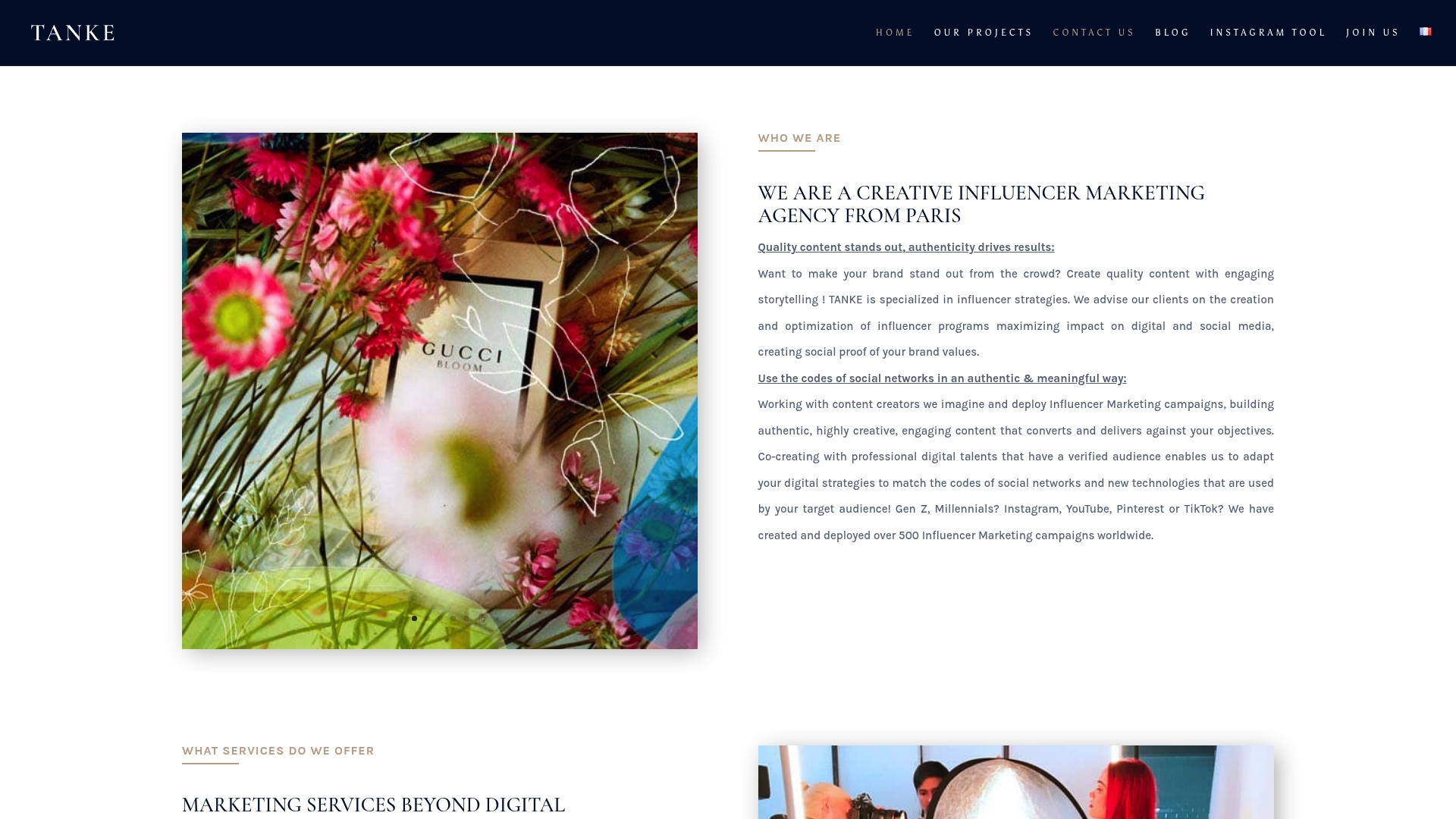
At TANKE, we specialize in turning these challenges into opportunities for growth and authentic connections. Our data-driven approach to influencer marketing ensures that your campaigns not only enhance brand visibility but also forge trust with your target audience. By providing tailored influencer strategies, comprehensive audits, and effective community management, we guide brands in leveraging both micro and macro influencers to create compelling narratives that resonate. Ready to ignite your brand’s storytelling and translate engagement into measurable business results? Visit us at https://tanke.fr and let’s elevate your influencer marketing to new heights today!
Why influencers
Give your brand a trusted voice
TANKE connects you with creators your customers already listen to.
Award-winning agency: Grand Prix Stratégies du Luxe (Gold, 2018) and Grand Prix de l’Influence (Silver, 2025).
- 01Review of your current campaigns
- 02Recommendations ranked by impact
- 03Debrief with a TANKE expert


